Children's Indoor Play Society


Wonder Wednesday
Wonder Wednesday is a play-based learning program held in a classroom at the CHIPS facility, designed especially for children ages 1 to 5. Each month, we introduce a new theme—such as Colours, Farm & Harvest, Numbers, Emotions, and more—giving little ones the chance to explore, imagine, and learn in fresh, exciting ways.
Our pretend play area changes monthly to spark creativity and support learning through role-play, while our early science learning center encourages curiosity and discovery. Children also enjoy hands-on activities like a sensory tuff tray, play dough cart, and many themed stations—all carefully planned around the monthly focus. Wonder Wednesday provides a fun and engaging foundation for kindergarten readiness, while also building on the important skills children are developing in their everyday lives.
This program was proudly launched with the support of funds awarded to CHIPS through the City of Wetaskiwin Community Grant Program. Thanks to this generous contribution, we were able to create new opportunities for children and families to learn, play, and grow together in a safe and engaging environment. The grant has helped us bring our vision to life, allowing us to expand our resources, offer enriching activities, and continue building a strong foundation of community support for local families.

September – Colours
Children are introduced to colour recognition, sorting, and mixing, helping them make connections between art, play, and the world around them. Activities include painting, matching games, and sensory bins that encourage children to explore shades and patterns. This theme helps develop creativity and early problem-solving skills.

October – Farm & Harvest
This month explores animals, food, and the changing season, encouraging children to discover nature, farming, and community life. Hands-on play includes pretend farmer’s markets, sensory play with grains, and crafts using leaves or pumpkins. Children gain an appreciation for where food comes from and the cycles of nature.

November – Numbers
Early math skills take center stage with activities that build counting, numeral recognition, and pattern-making. Children practice through songs, games, and hands-on manipulatives like blocks and beads. These activities support logical thinking and provide a fun foundation for future math learning.

December – Seasons
Children learn about weather, clothing, and seasonal activities, helping them understand how the world changes throughout the year. Through crafts, dress-up, and sensory play, they explore concepts like snow, rain, sunshine, and more. This theme encourages adaptability and awareness of the environment.

January – Shapes
Basic geometry concepts are introduced through sorting, building, and creative play, laying a strong foundation for spatial awareness. Activities include block towers, puzzles, and art projects where children create pictures from different shapes. These experiences help strengthen problem-solving and fine motor skills.

February – Emotions
Social-emotional learning is the focus as children practice recognizing, naming, and expressing feelings in positive and healthy ways. Activities include storytelling, role-play, and art projects that encourage self-expression. This theme builds empathy, communication skills, and emotional resilience.
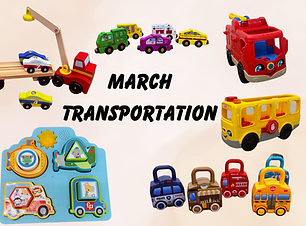
March – Transportation
Kids explore cars, trains, planes, and more—sparking curiosity about how we move and inspiring imaginative play and problem-solving. The pretend play area might transform into a bus station or airport, while science experiments demonstrate movement and speed. This theme fosters creativity and a deeper understanding of the world around them.

April – Letters
The alphabet is introduced through fun, hands-on activities that support early literacy and language development. Children may explore letter tracing, matching games, and songs that reinforce phonics. These playful experiences help build confidence and curiosity for reading and writing.

May – Senses
Children use sight, sound, touch, taste, and smell to investigate and understand the world in interactive, playful ways. Activities include sensory bins, sound-matching games, taste tests, and art inspired by different textures. This theme encourages curiosity and helps children make meaningful connections through exploration.